TV Mounting In Rockbank
TV Mounting Experts
Licensed CCTV, alarm, intercom and access control installation across Melbourne's west. We look at your property first, quote a fixed price, and hand the system over working.
Mounting a television is straightforward until it is not, and the point at which it stops being straightforward is usually a brick wall, a hidden pipe or a stud that is not where the detector says. Visionova Security mounts televisions across Rockbank, Aintree, Melton, Caroline Springs, Tarneit and the western corridor, on timber-framed walls, brick, concrete and above fireplaces, with cables concealed rather than dangling. We do a lot of this work alongside camera, data and Wi-Fi installations, because the customer is already having cable run and the wall is already open. Brackets are fixed into structure rather than plasterboard, viewing height is set for where you actually sit, and cabling is either run inside the wall or in neatly finished trunking. If you need a new power or data point behind the screen, we will tell you which parts we can do and which belong to a licensed electrician. Call 0485 702 206.
GET A FREE QUOTE
Visionova Security
Brackets, Walls And The Choices That Affect The Result
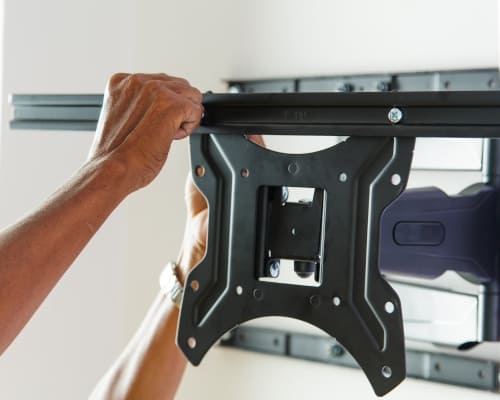
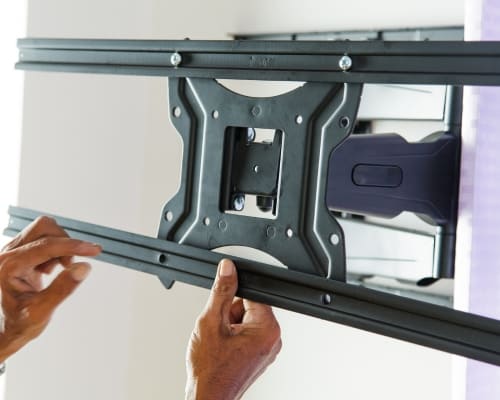
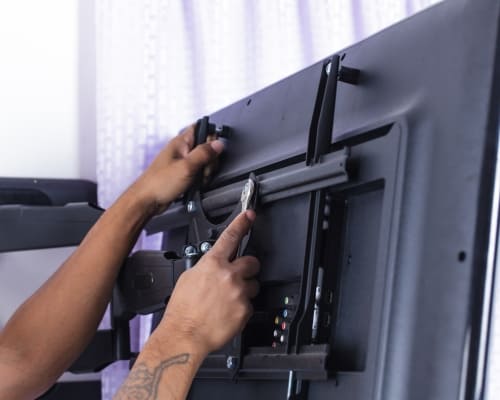
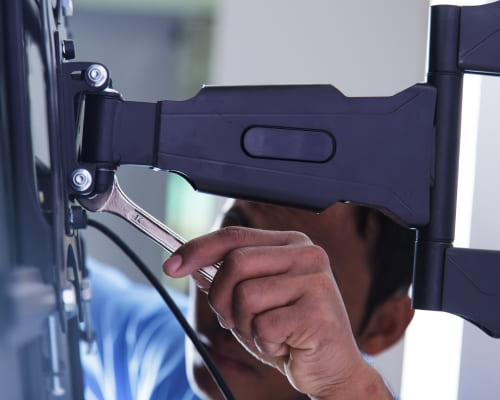
Most televisions get mounted for one of two reasons: the screen is too big for the unit it is sitting on, or the room simply looks wrong with a stand in the middle of it. Either way the job is straightforward until somebody discovers the wall is masonry, the studs are not where they should be, or there is no way to get the cables down behind it. The bracket decision comes first and it is genuinely worth thinking about. A fixed bracket holds the screen flat and close to the wall, looks the tidiest, and is right when the seating is directly in front and at the correct height. A tilting bracket allows a few degrees of downward angle and is the standard answer for a screen mounted higher than ideal, most commonly above a fireplace or in a bedroom. A full-motion arm swings the screen out and rotates it, which is the right choice for an open-plan living area where people watch from the kitchen as well as the couch, and for any installation where you need rear access to change cables later. A powder-coated steel bracket is matched to the screen using its VESA pattern, commonly 200 by 200, 400 by 400 or 600 by 400 millimetres on larger panels, and to its weight, which matters because a 75 inch screen on an extended arm applies far more leverage to the wall than its bare mass suggests. The wall then determines the fixing. Timber-framed plasterboard walls, which is most internal walls in the brick veneer estate housing, have studs at 450 mm or 600 mm centres and the bracket must land on them. Brick, block and concrete take masonry anchors and give the strongest result. Fibre cement and older sheeting need care, and pre-1990 wall and eave sheeting should never be drilled without checking what it is.
Visionova Security
How The Mount Is Set Out, Fixed And The Cables Hidden

Height is the decision people regret most often, and the guideline is simple: the centre of the screen should sit roughly at seated eye level, which for most living rooms puts it around 1000 mm to 1200 mm off the floor. Screens go higher than that constantly because a fireplace or a piece of furniture dictates it, which is exactly when a tilting bracket earns its money and why we ask where you sit before we mark the wall. Setting out then means locating structure properly rather than trusting a cheap detector, checking for pipes and cables before drilling, and fixing into the studs at 450 mm or 600 mm centres or into masonry with anchors sized to the load. Aspect matters on external work too: the Bureau of Meteorology's Rockbank station records an annual average of only 513.5 mm of rain, so a west-facing wall in this corridor is dealing with ultraviolet exposure and heat, not damp, which is why any external cable run goes in 20 mm conduit with galvanised saddles. On brick we control the dust, because drilling brick throws a fine red powder that stains carpet and is the reason the trade charges more for it. Cable concealment is the finishing decision. In a timber-framed wall the cleanest result is running the cables inside the cavity between two brush plates, one behind the screen and one behind the cabinet, which leaves nothing visible at all. In a brick or concrete wall that is not possible without chasing, so the neat answer is a paintable trunking run vertically to the cabinet. If you want a power point or a data point relocated behind the screen, the data side is our work and the fixed 240 volt side belongs to a licensed electrician under AS/NZS 3000, and we will say so rather than improvise. A recessed outlet behind the screen is also the natural moment to add data points installation, because a hardwired point behind the television removes the buffering that no amount of wireless tuning will fix.
Visionova Security
Why Have Us Do It While We Are Already There
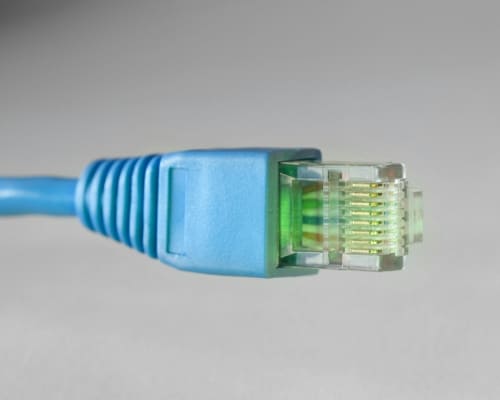
Most of our television mounting happens as part of another job, and that is where the value sits for the customer. If we are already running Cat6 for a camera system or an access point, the media wall is on the way, the ladder is already up and the roof cavity is already open, so mounting the screen and running a data point behind it adds far less than booking it separately. It also produces a better result, because the television, the network point and the cable route get planned together rather than one being retrofitted around the other. The other reason customers ring us for this specifically is honesty about walls. A great many homes across the newer estates around Aintree, Cobblebank and Thornhill Park have plasterboard bulkheads, service voids and party walls that look solid and are not, and older houses near Exford Road and Station Road in Melton South can have surprises behind the plaster. We check before we drill, we tell you if the wall you have chosen is a poor idea, and we will suggest a different position rather than fixing a heavy screen into something that will not hold it. It is also why the job is usually booked alongside CCTV installation or cabling, which is why it costs less than a standalone call-out.
Visionova Security
What TV Mounting Costs
Published 2026 Australian pricing puts a standard television wall mount between $120 and $250, and Melbourne specifically sits at the lower end of that with a commonly quoted range of about $95 to $160 and a median near $120 for a straightforward job on a timber-framed wall. Premium installations, meaning a full-motion arm, a large screen or in-wall cable concealment, run between $250 and $450. Full home theatre setups with multiple devices, a soundbar or in-wall speakers sit between $450 and $900. Brick and concrete walls add roughly $40 to $80 because of the masonry anchors, the drilling time and the dust control that stops red brick powder marking carpet. Supplying the bracket is an additional cost if you do not already have one, and it is worth spending properly here because the bracket is what holds the screen to the wall. Adding a data point behind the television is the usual $150 to $300 per point, and a new power outlet is separate electrician's work. Where we are already on site for camera, intercom or data work, television mounting is materially cheaper than a standalone visit. These are published market ranges instead of a Visionova Security price list. Call 0485 702 206.
Visionova Security
Surface Trunking, In-Wall Concealment Or A New Outlet
Three ways to deal with the cables, and the right one depends almost entirely on how the wall is built. Surface trunking is a paintable channel fixed to the wall face carrying the cables from the screen down to the cabinet. It is the cheapest, it works on any wall including brick and concrete, and painted to match it is far less obtrusive than people expect. In-wall concealment runs the cables inside the wall cavity between two brush plates and leaves nothing visible, which is the best-looking result and is only straightforward in a timber-framed plasterboard wall. It is worth knowing that mains power leads are not permitted to be run inside a wall cavity, so proper in-wall concealment means either an approved in-wall rated kit or having a licensed electrician install a new outlet behind the screen. That third option, a recessed power and data outlet behind the television, is the premium result: nothing visible, nothing surface-mounted, and space behind the screen for the plugs so it sits flat against the wall. It costs the most because it involves an electrician alongside us. Our usual recommendation is in-wall concealment with a recessed outlet for a main living room screen in a framed wall, and neat painted trunking anywhere the wall is masonry. If the television keeps dropping out rather than looking untidy, the honest fix is Wi-Fi range extenders or a cabled point rather than a different bracket. Call 0485 702 206 with the screen size and the wall type and we will give you a fixed price, and tell you if a different position would serve you better.
Related Concreting Services
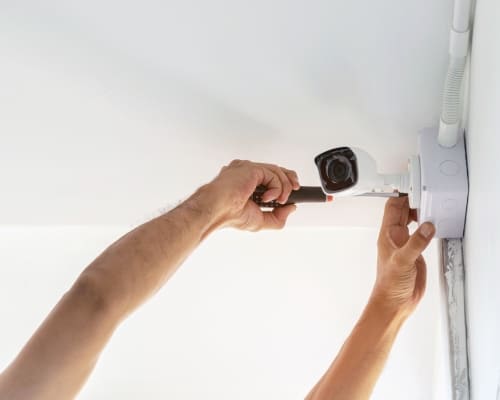
Intruder alarm systems designed to AS/NZS 2201.1 and zoned around how your household actually lives, so the alarm gets armed instead of ignored. Monitored or self-monitored, with no lock-in contracts and a fixed price up front.
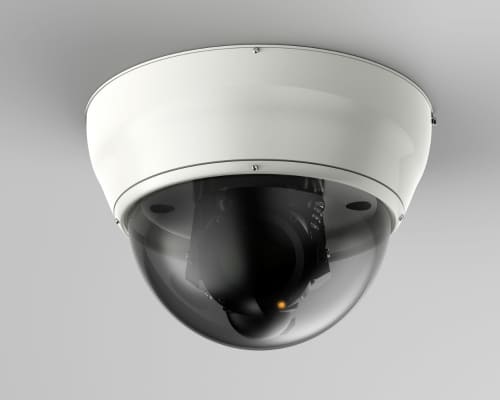
Professionally designed and installed security camera systems for homes and businesses across Melbourne's west, hardwired and recorded locally. Fixed written quote before we start, and the app set up on your phone before we leave.
TESTIMONIALS
What Our TV Mounting Customers Say About Us
The Process
3 Step Process For Your TV Mounting Needs

On-Site Security Assessment
We walk the property with you, check entry points, sight lines and cable routes, then recommend only the equipment your home or business actually needs.

Fixed-Price CCTV and Alarm Quote
You get a written price before anything starts, itemised by camera, sensor or point, with no hourly rate creeping up and no surprises on the invoice.

Licensed Installation and Handover
We install, test every device, set the app up on your phone and show you how it works before we leave your property.
TV Mounting In Rockbank
FREQUENTLY ASKED QUESTIONS
Everything you need to know about our TV Mounting In Rockbank
How much does it usually cost to mount a TV?
Published 2026 Australian pricing puts a standard wall mount between $120 and $250, with Melbourne commonly quoted around $95 to $160 for a straightforward job on a timber-framed wall. A full-motion arm, a large screen or in-wall cable concealment moves it to $250 to $450, and a full home theatre setup to $450 to $900. Brick or concrete adds roughly $40 to $80 for masonry anchors and dust control. If we are already on site for camera or data work, it costs less again.
Is it better to have a TV too high or too low?
Too low, comfortably. The guideline is that the centre of the screen should sit near seated eye level, roughly 1000 mm to 1200 mm off the floor in a typical living room, and a screen slightly below that is far more comfortable over an evening than one slightly above it. Screens mounted above fireplaces are the common exception and they force your neck into a sustained upward angle, which is exactly what a tilting bracket is for. We ask where you actually sit before marking the wall, because the room dictates the answer more than any rule does.
Do you need an electrician to mount a TV?
Not for the mounting itself, which is a fixing and cabling job. You do need a licensed electrician if you want a new power outlet installed behind the screen, because that is fixed 240 volt work under AS/NZS 3000. It is also worth knowing that a standard appliance power lead is not permitted to be run inside a wall cavity, so genuinely concealed power means either an approved in-wall rated kit or a new outlet. We handle the mount, the data and the signal cabling, and we are upfront about which part needs an electrician.
Can I mount a TV by myself?
On a timber-framed plasterboard wall with studs you can find and a screen two people can lift, yes, and plenty of people do it well. The three things that catch people out are fixing into plasterboard instead of a stud, drilling into a hidden pipe or cable, and underestimating the leverage a large screen applies on an extended arm. Brick and concrete are harder again because the anchor choice actually matters. If the screen is large, the wall is masonry or you want the cables hidden, the job is worth handing over.
Can you mount a TV on a brick or concrete wall?
Yes, and masonry actually gives the strongest fixing of any wall type because the anchors go into solid material rather than relying on a stud. The trade-offs are cost and mess: masonry anchors and drilling take longer, and drilling brick produces a fine red dust that will stain carpet if it is not controlled, which is why the trade typically adds $40 to $80 for it. Concealing cables inside a masonry wall is not practical without chasing, so the tidy answer there is paintable surface trunking run down to the cabinet.
Can you hide the cables so nothing is visible?
In a timber-framed plasterboard wall, yes, completely. We fit a brush plate behind the screen and another behind the cabinet and run the signal cables through the cavity between them, so nothing is on show. For power the correct approach is either an approved in-wall rated kit or a recessed outlet installed by a licensed electrician behind the screen, which also lets the television sit flatter against the wall. On brick or concrete, full concealment is not practical without chasing the wall, so we use paintable trunking, which once painted is far less noticeable than most people expect.
Request A Free TV Mounting Quote
GET A FREE QUOTE
BUSINESS
SERVICES
SERVICE AREAS
OPERATING HOURS
Sun: 7:00am - 9:00pm
Mon: 7:00am - 9:00pm
Tue: 7:00am - 9:00pm
Wed: 7:00am - 9:00pm
Thu: 7:00am - 9:00pm
Fri: 7:00am - 9:00pm
Sat: 7:00am - 9:00pm