Alarm Systems In Rockbank
Alarm Systems Experts
Licensed CCTV, alarm, intercom and access control installation across Melbourne's west. We look at your property first, quote a fixed price, and hand the system over working.
An alarm only protects a property if it gets armed, and it only gets armed if it is easy to live with. Visionova Security designs and installs intruder alarm systems to AS/NZS 2201.1 across Rockbank, Melton, Melton South, Caroline Springs, Tarneit and the surrounding western suburbs, with the detection laid out around how your household actually moves rather than a sensor in every room. Gurjit holds Victorian Private Security Individual Licence Z70-718-31S as a Security Adviser and Security Equipment Installer, so the zoning plan and the installation come from the same person. We fit monitored and self-monitored systems, we will tell you plainly which one is worth paying for in your situation, and we do not sell lock-in monitoring contracts. If you already have a builder's alarm pre-wire sitting unused behind a plate, we can usually commission it rather than start again. Call 0485 702 206 for a fixed written quote.
GET A FREE QUOTE
Visionova Security
Panels, Sensors And Sirens: What Goes Into A Working Alarm System
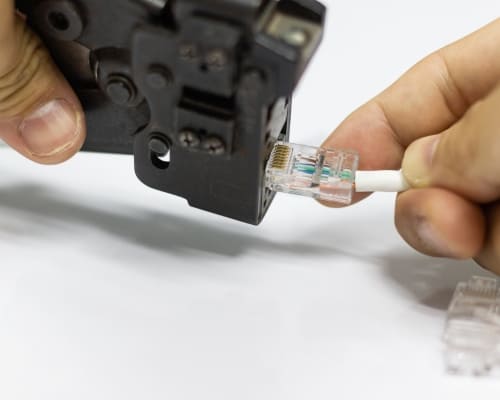
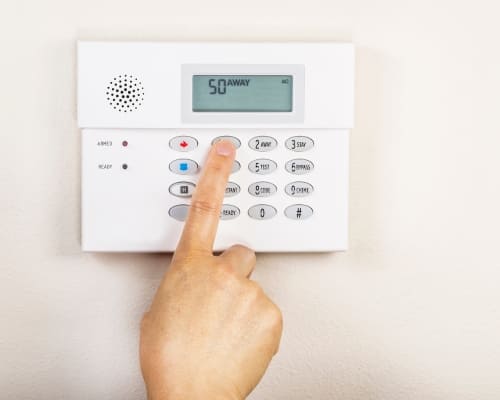
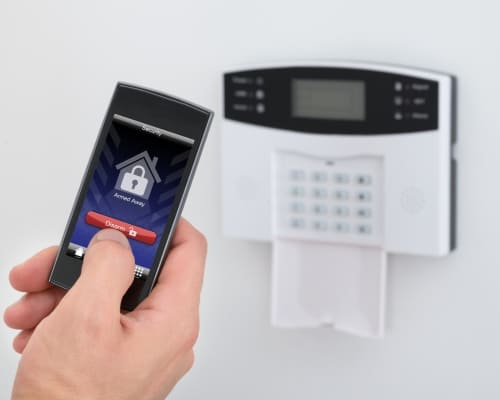
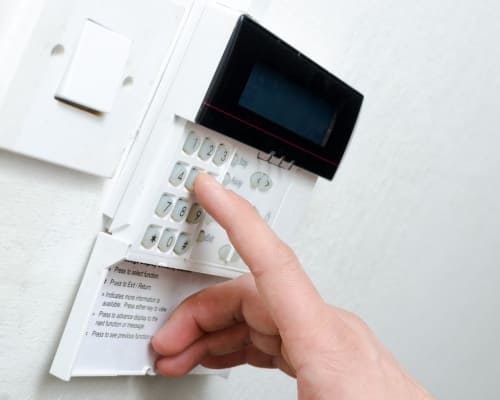
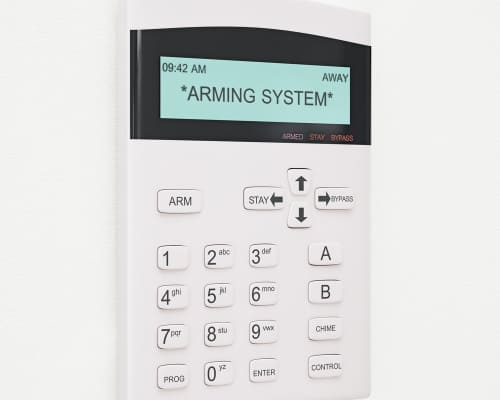
An alarm becomes urgent for most households after a break-in nearby, or when insurance asks the question, or when a system that came with the house starts beeping and nobody knows why. Underneath all three is the same practical problem: a house that is empty for eight hours a day with nothing to interrupt somebody who gets inside. A residential alarm system is a control panel, a keypad or app to arm it, a set of detectors and a way of making noise or making a phone ring. The detector mix is where the thinking happens. Standard passive infrared sensors detect body heat moving across their pattern and are the backbone of most homes, mounted at around 2100 mm to 2400 mm so the pattern sweeps the room instead of the ceiling. Dual-technology sensors add microwave detection and require both technologies to agree before triggering, which is the practical answer in a room with a heater vent, a sunny window or a cat. Pet-tolerant detectors are genuinely effective up to a stated animal weight rather than being a marketing label, and getting that specification right is the difference between a working alarm and one the family stops arming. Reed switches on doors and windows tell you a perimeter has been opened before anyone is inside, which is the detection most homes skip and most burglaries defeat. Glass-break detectors listen for the specific acoustic signature of breaking glass and suit large fixed panes. Outside, an external siren with a strobe in a powder-coated cover does two jobs: it tells the street something is happening and it makes the property a slower target. On commercial sites we add duress facilities and separate arming areas so a shop floor can be secured while a back office is still in use.
Visionova Security
How An Alarm Is Zoned, Wired And Commissioned Properly

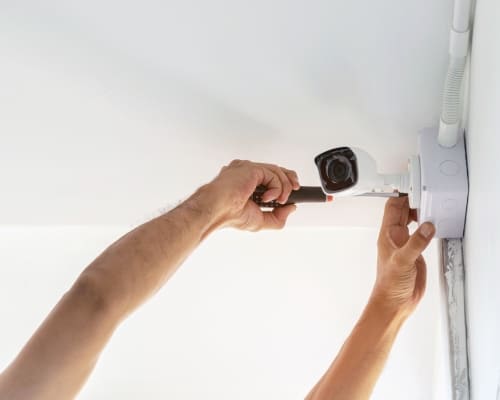
Installing an alarm to AS/NZS 2201.1, the Australian and New Zealand standard for intruder alarm systems in a client's premises, is mostly about design decisions made before anything is screwed to a wall. We zone the system so you can arm the perimeter and still move around the house at night, which is the single change that turns an alarm from a nuisance into something a family actually uses every evening. Entry and exit delays are set to real-world timing rather than defaults, because a ten second exit delay in a house where the car is at the end of a long driveway guarantees false alarms. Every detector circuit is monitored for tamper so cutting a cable raises an alarm rather than silently disabling a zone, and the panel carries a sealed backup battery sized to keep the system alive through a mains outage. Cabling is run in the roof cavity and dropped inside wall cavities where the house allows it, which is straightforward in the slab-on-ground brick veneer construction that dominates the newer estates and much harder in the older Melton stock built from the 1960s onwards, where surface conduit fixed with galvanised saddles is sometimes the neatest honest answer. We keep the panel and battery out of the roof space, because a roof cavity on a dark-roofed estate house sits far above the 26.7 degree mean January maximum recorded at Melbourne Airport and heat is what kills sealed batteries early. Commissioning means walk-testing every zone with you present, not ticking a box. On properties where the perimeter is the concern, alarms work best alongside CCTV installation, because the alarm interrupts and the cameras identify.
Visionova Security
Why Visionova Security Rather Than A National Alarm Brand
The alarm market in Melbourne's west is split between national brands selling a monitoring subscription with the hardware attached, and general trades who fit alarms as a sideline. Both leave gaps. The national model works on volume, which means a standard sensor layout applied to a non-standard house and a contract that is easier to sign than to leave. The sideline model produces alarms that are wired correctly and zoned badly. Visionova Security is licensed specifically for this work under Victorian Private Security Individual Licence Z70-718-31S, endorsed as both a Security Adviser and a Security Equipment Installer, and that number is publicly checkable on the Victoria Police register. Practically, being local to Rockbank means we know that a house backing onto the Arnolds Creek reserve in Harkness has a rear-boundary exposure a front-heavy sensor layout will never see, and that a shop on Station Road has a completely different risk profile from a house two streets away. We are also straight about monitoring: it is genuinely valuable for some properties and an unnecessary monthly cost for others, and we will tell you which you are. There is no lock-in contract, no proprietary panel you cannot have serviced by anyone else, and no charge for the site visit. We also fit access control on commercial sites, so a business can arm the premises and control who holds a working credential from the same visit.
Visionova Security
What An Alarm System Costs, Including Monitoring
Published 2026 Australian pricing puts a complete home alarm system supplied and installed between $900 and $2,200, with the spread driven mostly by the number of detectors and whether the house is single or double storey. Within that, the hardware itself is commonly $900 to $1,400 and professional installation $600 to $1,500 on larger or more complex jobs. Commercial systems generally start around $1,500 and rise with the number of arming areas and the amount of cabling through a suspended ceiling. Back-to-base monitoring is the recurring cost and sits between $30 and $80 a month across the Australian market, with typical Melbourne pricing in the $30 to $100 band depending on service level and whether the monitoring includes guard response. There is also usually a one-off setup fee to connect the panel to a monitoring centre. If you already have a builder's pre-wire, commissioning it is materially cheaper than a fresh installation because the labour-heavy cabling is already in the walls, and that applies to a great many homes handed over across Aintree, Cobblebank and Strathtulloh in the last decade. These are market ranges from published installer pricing rather than a Visionova Security price list, and the real figure comes after we have looked at the property. The quote is free, written and fixed before anything starts. Call 0485 702 206.
Visionova Security
Monitored, Self-Monitored Or App-Only: Which One Is Worth It
Back-to-base monitoring means a staffed centre receives the alarm signal and follows a documented escalation, contacting you, then your nominated contacts, then police or a patrol. It is worth paying for when a property is unoccupied for long stretches, when it holds stock or tools worth stealing, when insurance requires it, or when nobody nearby will respond to a siren. Self-monitoring means the system messages your phone directly and the escalation is you. It costs nothing monthly and works well for a family home in a street where somebody is usually around, but it fails at exactly the moment you are on a plane or asleep. App-only alarms sold as consumer kits sit below both: they are quick to set up, but they are typically wireless throughout, unmonitored for tamper, and dependent on your home Wi-Fi staying up, which means a flat battery or a router reboot silently removes your protection. Our usual recommendation for a home in the Melton corridor is a properly zoned hardwired panel with self-monitoring to start, wired so that monitoring can be added later without changing the hardware. That way you are not paying a subscription you do not need, and you are not locked out of one you might. Businesses are the reverse case, and we will say so plainly. Whichever route you take, the panel we fit can be serviced by anyone, and we handle security camera repairs on existing equipment rather than insisting on a replacement. There is no charge for the site visit and no lock-in monitoring contract, and the price is fixed in writing before we start. Call 0485 702 206.
Related Concreting Services
Wireless coverage designed from a real signal survey, not guesswork, using mesh nodes and cabled access points. We fix the dead bedroom, the garage with no signal and the back of the block properly.
Televisions mounted into real structure on timber, brick or concrete, at the right height, with cables concealed rather than dangling. Usually done on the same visit as your data point or camera work.
TESTIMONIALS
What Our Alarm Systems Customers Say About Us
The Process
3 Step Process For Your Alarm Systems Needs

On-Site Security Assessment
We walk the property with you, check entry points, sight lines and cable routes, then recommend only the equipment your home or business actually needs.

Fixed-Price CCTV and Alarm Quote
You get a written price before anything starts, itemised by camera, sensor or point, with no hourly rate creeping up and no surprises on the invoice.

Licensed Installation and Handover
We install, test every device, set the app up on your phone and show you how it works before we leave your property.
Alarm Systems In Rockbank
FREQUENTLY ASKED QUESTIONS
Everything you need to know about our Alarm Systems In Rockbank
What are the 4 types of alarm systems?
In practice the four categories people mean are hardwired systems, wireless systems, monitored systems and self-monitored or unmonitored systems, and the first pair describes how the alarm is built while the second pair describes what happens when it triggers. Hardwired panels are more reliable and cannot be jammed; wireless ones are faster to retrofit into a house with no roof access. Monitored means a staffed centre responds; self-monitored means you do. Most homes we fit in the western suburbs end up hardwired and self-monitored, wired so monitoring can be switched on later without replacing anything.
How much should a house alarm system cost?
Published 2026 Australian pricing puts a complete home alarm supplied and installed between $900 and $2,200, driven mostly by detector count and whether the house is single or double storey. Back-to-base monitoring adds $30 to $80 a month. If your home already has a builder's alarm pre-wire that was never commissioned, which is extremely common across the newer estates, activating it costs considerably less than a fresh installation. We quote in writing after looking at the property. Call 0485 702 206.
Can I install an alarm system myself?
You can buy and fit a consumer wireless kit yourself, and plenty of people do. What you cannot do yourself is have it connected to a back-to-base monitoring centre, and in Victoria installing security equipment as a service for others requires a private security licence under the Private Security Act 2004. The bigger issue is design rather than legality: most self-installed systems end up with detectors covering the rooms that are easy to reach and nothing on the perimeter, so the alarm sounds after somebody is already inside. If you have already bought a kit, we are happy to install and zone it properly rather than sell you different hardware.
How much does a monitored alarm system cost to run each month?
Across the Australian market, back-to-base monitoring runs between $30 and $80 a month, with Melbourne pricing typically $30 to $100 depending on service level and whether guard response is included. Business monitoring commonly sits in the $45 to $65 range. There is usually a one-off connection fee to link the panel to the monitoring centre as well. We do not lock customers into monitoring contracts, and we will tell you honestly if your property does not need it.
Why does my alarm keep going off for no reason?
False alarms almost always trace to one of five things: a sensor pointed at a heater vent, a sunny window or a reflective surface; a pet exceeding the weight rating of a pet-tolerant detector; a flat backup battery causing the panel to misbehave; an insect or spider web inside a detector housing; or an entry and exit delay set too short for the way the household actually leaves. All five are fixable, and none of them require replacing the system. A service call to diagnose it sits in the usual $150 to $220 range covering the first hour.
Should I get an alarm, cameras, or both?
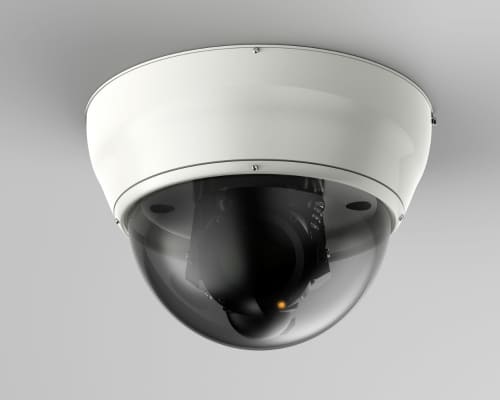
They do genuinely different jobs and the honest answer depends on what you are worried about. An alarm interrupts an intrusion while it is happening and is the better deterrent, because noise and a strobe make a property a slow target. Cameras tell you what happened and give police something to work with, but they do not stop anything on their own. If the budget only stretches to one, we usually suggest a perimeter-zoned alarm first for an occupied family home, and cameras first for a business or a property that is regularly empty. Combining them is better than either, and the two systems can be installed on the same visit.
Request A Free Alarm Systems Quote
GET A FREE QUOTE
BUSINESS
SERVICES
SERVICE AREAS
OPERATING HOURS
Sun: 7:00am - 9:00pm
Mon: 7:00am - 9:00pm
Tue: 7:00am - 9:00pm
Wed: 7:00am - 9:00pm
Thu: 7:00am - 9:00pm
Fri: 7:00am - 9:00pm
Sat: 7:00am - 9:00pm