Data Points Installation In Rockbank
Data Points Installation Experts
Licensed CCTV, alarm, intercom and access control installation across Melbourne's west. We look at your property first, quote a fixed price, and hand the system over working.
Most home network problems are cabling problems wearing a Wi-Fi costume. Visionova Security installs Cat6 data points and structured cabling across Rockbank, Aintree, Melton, Caroline Springs, Tarneit and the western corridor, for hardwired internet to a study or media room, backhaul for wireless access points, camera runs and full whole-home cabling to a central patch panel. Cabling that connects to the telecommunications network must be carried out by an ACMA-registered cabler under the AS/CA S009 wiring rules, which is not optional and not something to take on trust. Every point is terminated to a keystone jack in a wall plate, tested, and labelled at both ends so the next person can work out what goes where. If you are having cameras or a mesh network installed anyway, running the data at the same time is far cheaper than coming back. Call 0485 702 206.
GET A FREE QUOTE
Visionova Security
From A Single Point To A Whole-Home Structured Cabling System
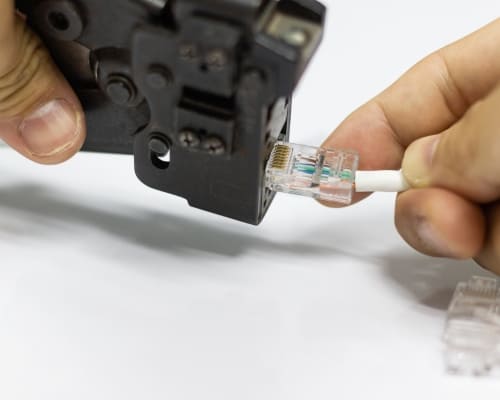
Almost everyone who rings about a data point has spent months blaming their internet provider. The video call drops in the study, the television buffers in the evening, the console lags, and no amount of restarting the modem fixes it, because the fault is not the connection coming into the house but the way it is being carried around inside it. The smallest job is a single Cat6 point, typically run from the router to a study, a television or a games console where a wireless connection keeps dropping under load. It is often the highest-value hour anyone spends on their home network. The next step up is a small set of points serving the rooms that matter, usually the study, the main living area and one or two bedrooms, all run back to the same place so they can share a switch. Whole-home cabling runs every point back to a central position, generally a patch panel in a garage cabinet or a laundry cupboard, and is worth doing properly if a house is being built or renovated because the cost of cable is trivial compared with the cost of opening walls later. Access point backhaul is a specific and increasingly common category: rather than a mesh system relaying wirelessly, each access point gets its own Cat6 run and its own power over that cable, which removes the single biggest cause of poor mesh performance. Camera runs are the same cable doing the same job. There is also the tidy-up work nobody advertises: relocating the internet connection point away from the bedroom the builder put it in, and getting the modem, switch and recorder into one cabinet instead of three power boards.
Visionova Security
How Data Cabling Is Run, Terminated And Tested Properly
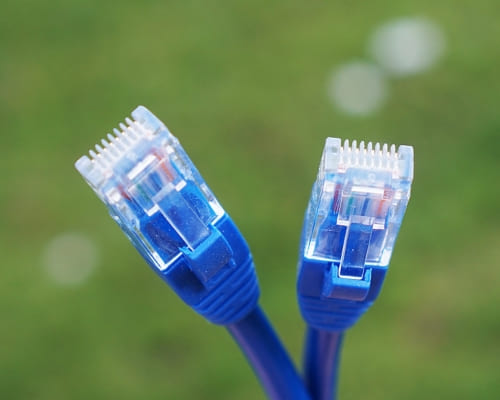
Structured cabling has rules, and the ones that matter are easy to describe and easy to get wrong. The permanent link is limited to 90 metres with 10 metres allowed for patch leads at either end, giving a 100 metre channel, which sounds generous until you follow a cable up into a truss roof, across a house and back down a wall. Bend radius matters: a Cat6 cable pulled tighter than about 25 mm at a corner has its pairs deformed and will pass a quick test while failing under sustained load. Separation from mains wiring matters, because running data cable stapled alongside a 240 volt run invites interference. Termination is where most amateur work fails, since untwisting more than about 13 mm of pair at the keystone jack destroys the noise rejection that makes the cable work at all. We use Cat6 as standard, which handles gigabit comfortably and 10 gigabit over shorter runs, and Cat6A where a run is long or the customer is future-proofing a home office. Cable is routed through the roof cavity wherever the roof allows it, dropped inside wall cavities in the brick veneer construction typical of the estates, and run in conduit fixed with galvanised saddles where it has to go outside. Every point is then tested rather than assumed, and both ends are labelled so the system remains maintainable by someone who was not there on the day. The same cable, the same roof access and the same 90 metre limit apply whether the run is feeding a network point or a camera, which is why data and CCTV installation are quoted together.
Visionova Security
Why Use A Registered Cabler Rather Than A Handyman
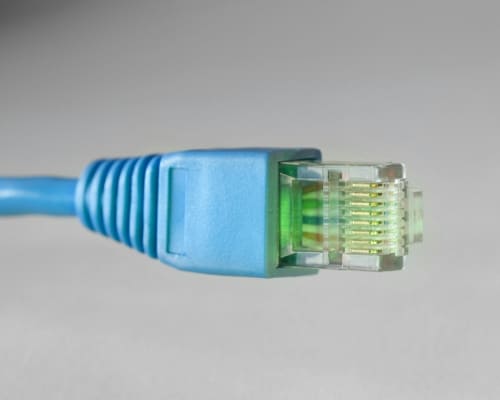
In Australia, cabling that connects to the telecommunications network must be installed by an ACMA-registered cabler working to the AS/CA S009 wiring rules. That is a legal requirement instead of a professional courtesy, and doing it without registration carries real penalties. It also matters practically, because an incorrectly terminated or unregistered installation can affect an insurance claim and will certainly cause problems at sale time. Beyond compliance, the reason to use somebody who does this every week is that data cabling is unforgiving of small mistakes: a run that is 15 metres too long, a pair untwisted a few millimetres too far or a cable pulled around a sharp roof timber will all produce a network that works on the day and misbehaves for years afterwards, generally getting blamed on the internet provider. Visionova Security runs data cabling alongside camera, intercom and access control work, which is where the real advantage sits for customers in Melbourne's west, whether that is a new build off Frontier Avenue in Aintree or a 1970s house near Exford Road that has never had a network cable in it: one visit, one set of cable runs and one person who knows where everything goes, rather than a cabler, a security installer and a network person each solving their own part and none of them labelling anything. Most whole-home cabling jobs here include at least one drop for a ceiling access point, which is the permanent fix behind our Wi-Fi range extenders work.
Visionova Security
What Data Point Installation Costs
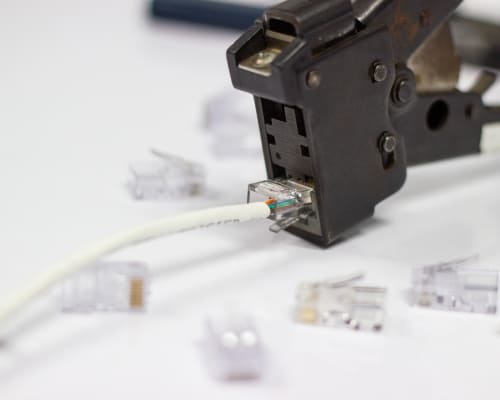
Published 2026 Australian pricing puts a standard Cat6 data point between $150 and $300 installed, covering the cable, the wall plate, the keystone termination and the labour. Simple residential drops in a house with easy roof access can come in lower, from around $80 to $120 per drop, while a difficult run through a double-storey wall cavity or a raked ceiling sits at the top of the band or above it. The economics change sharply with volume: the first point carries the setup, the ladder work and the trip, so six points run in the same visit cost far less each than six points run on six separate days. A whole-home installation with a patch panel and a small cabinet typically runs into the low thousands depending on the number of points and the size of the house, and published Victorian pricing puts the upper end of larger residential and small commercial jobs at $2,500 and beyond. Commercial-grade fibre runs are a different category again at $300 to $500 per drop. If we are already on site installing cameras or an intercom, adding data points is materially cheaper because the roof access and the cable route are already open. These are market ranges instead of a Visionova Security price list. Call 0485 702 206 for a fixed quote.
Visionova Security
Cat6, Cat6A, Powerline Or Mesh: What Actually Solves The Problem
If the problem is a room that buffers, there are four candidate answers and only two of them are good. Cat6 cable to that room is the complete fix: full speed, no interference, no latency spikes, and it will still be correct in fifteen years. Cat6A does the same with more headroom for very long runs or a serious home office, at modestly higher cost. Powerline adapters, which send data over your electrical wiring, are the tempting cheap option and are genuinely unpredictable, because performance depends on how your house is wired and which circuits the two ends sit on, and they collapse when an appliance with a motor starts up. A mesh Wi-Fi system is a real solution rather than a bodge, but its performance depends almost entirely on how the nodes talk to each other: a mesh with wireless backhaul typically halves throughput at every hop, while a mesh with each node fed by its own Cat6 cable performs like a cabled network at every point in the house. That is the practical conclusion for most homes across the Melton corridor: run cable to two or three access point positions, and let wireless do what it is genuinely good at rather than asking it to carry the whole load. While the wall is open behind a media unit is also the right moment for TV mounting, since the bracket, the power and the data all want planning together. Ring 0485 702 206 with a rough idea of which rooms you want served and we will give you a fixed written price after looking at the roof access.
Related Concreting Services
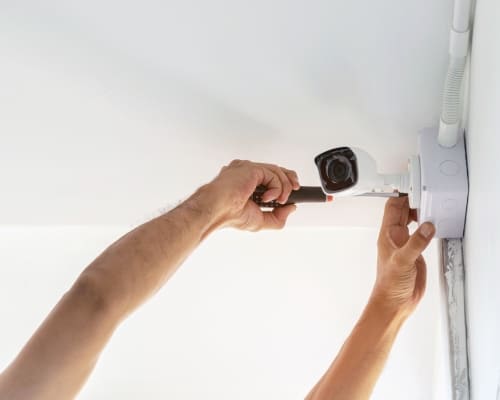
Cameras offline, night vision washed out, or the recorder no longer recording? We diagnose and repair security camera systems across Melbourne's west, including systems we did not install, and tell you honestly whether to repair or replace.
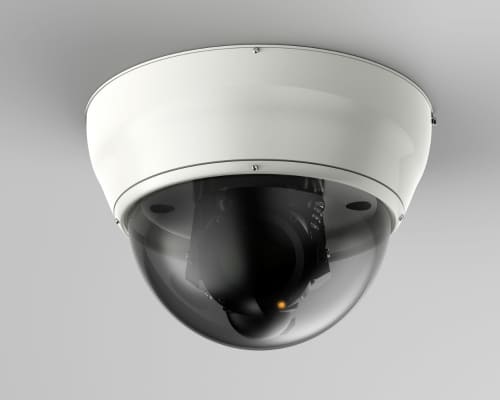
Professionally designed and installed security camera systems for homes and businesses across Melbourne's west, hardwired and recorded locally. Fixed written quote before we start, and the app set up on your phone before we leave.
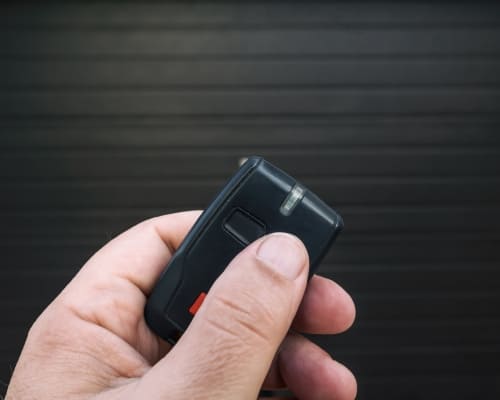
Intruder alarm systems designed to AS/NZS 2201.1 and zoned around how your household actually lives, so the alarm gets armed instead of ignored. Monitored or self-monitored, with no lock-in contracts and a fixed price up front.
TESTIMONIALS
What Our Data Points Installation Customers Say About Us
The Process
3 Step Process For Your Data Points Installation Needs

On-Site Security Assessment
We walk the property with you, check entry points, sight lines and cable routes, then recommend only the equipment your home or business actually needs.

Fixed-Price CCTV and Alarm Quote
You get a written price before anything starts, itemised by camera, sensor or point, with no hourly rate creeping up and no surprises on the invoice.

Licensed Installation and Handover
We install, test every device, set the app up on your phone and show you how it works before we leave your property.
Data Points Installation In Rockbank
FREQUENTLY ASKED QUESTIONS
Everything you need to know about our Data Points Installation In Rockbank
How much does it cost to install a data point?
Published 2026 Australian pricing puts a standard Cat6 point between $150 and $300 installed, including cable, wall plate, termination and labour. Straightforward drops in a single-storey home with good roof access can be lower, around $80 to $120 each. The important thing to know is that points get much cheaper per point when several are done in one visit, because the trip, the ladder work and the setup are shared. If we are already on site running cameras or an intercom, adding data points costs less again. Call 0485 702 206.
Do you need to be an electrician to run a data cable?
No, but you do need to be a registered cabler. In Australia, cabling that connects to the telecommunications network must be installed by an ACMA-registered cabler working to the AS/CA S009 wiring rules, and doing that work unregistered carries real penalties. An electrical licence and a cabling registration are different things, which is why some electricians hold both and some do not. Any fixed 240 volt work involved, such as adding a power outlet for a cabinet, is separately a licensed electrician's job under AS/NZS 3000.
Is a data point the same as an Ethernet port?
In everyday use, yes. A data point is the wall plate with an RJ45 socket in it, and the Ethernet port is the socket itself, fed by a Cat6 cable running back to your router or switch. The distinction people actually care about is between a data point and a telephone point: older Australian homes are full of legacy phone sockets that look similar, are wired to a single pair and will not carry a network connection. If your house has a wall socket you are not sure about, we can test it and tell you what it is.
Can electricians do data cabling?
Many can, provided they hold a current ACMA cabling registration in addition to their electrical licence, because the two qualifications cover different work. The practical difference is one of focus rather than legality: an electrician who runs data occasionally will generally get the cable in, while someone who terminates and tests data every week is the one who catches the 95 metre run, the over-untwisted pair and the missing labels. Ask whoever you engage for their cabler registration number, the same way you would ask a security installer for their licence.
How many data points does a house actually need?
Fewer than a full structured cabling brochure suggests and more than most homes have. The pattern that works for the majority of houses across the western estates is one point at the main television, one or two in the study or home office, and two or three feeding wireless access points positioned to cover the house, all running back to a single cabinet. That is five to seven points and it removes essentially every network complaint. Cabling every bedroom is worth doing only during construction or a renovation, when the cable is cheap and the walls are already open.
How long does data cabling take?
A single point in a single-storey house with roof access is usually an hour or two. A set of five or six points terminated to a small patch panel is typically a full day. Whole-home cabling in an existing double-storey house takes longer because each drop has to be fed down a wall cavity, and in a house with a raked or concrete ceiling sections may need external conduit. In a new build or renovation the first fix is quick because the walls are open, which is exactly why it is the cheapest time to do it.
Request A Free Data Points Installation Quote
GET A FREE QUOTE
BUSINESS
SERVICES
SERVICE AREAS
OPERATING HOURS
Sun: 7:00am - 9:00pm
Mon: 7:00am - 9:00pm
Tue: 7:00am - 9:00pm
Wed: 7:00am - 9:00pm
Thu: 7:00am - 9:00pm
Fri: 7:00am - 9:00pm
Sat: 7:00am - 9:00pm