CCTV Installation In Melbourne
CCTV Installation Experts
Licensed CCTV, alarm, intercom and access control installation across Melbourne's west. We look at your property first, quote a fixed price, and hand the system over working.
CCTV installation done properly starts with the property, not the product. Visionova Security designs and installs security camera systems across Rockbank, Melton, Caroline Springs, Tarneit and the wider western corridor, sized to the sight lines that actually matter rather than sold as a four-camera box off a shelf. Gurjit holds Victorian Private Security Individual Licence Z70-718-31S, endorsed as both a Security Adviser and a Security Equipment Installer, so the person who works out where your cameras belong is the person who runs the cable and mounts them. Every system is hardwired where we can, recorded locally so footage survives an internet dropout, and handed over with the app working on your phone. We install Dahua hardware as standard and will happily work with equipment you have already bought. For a fixed written quote on CCTV installation, call 0485 702 206.
GET A FREE QUOTE
Visionova Security
The Camera Types We Install And Where Each One Earns Its Keep
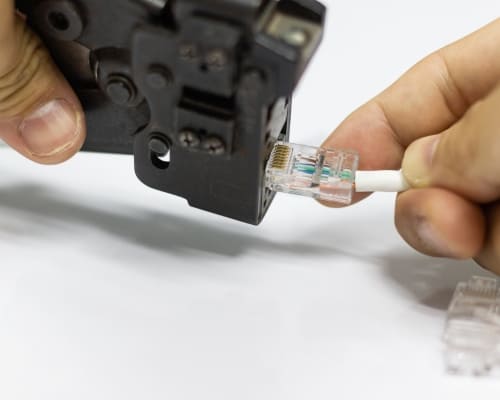
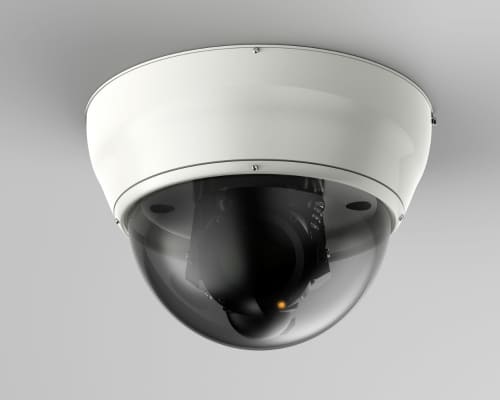
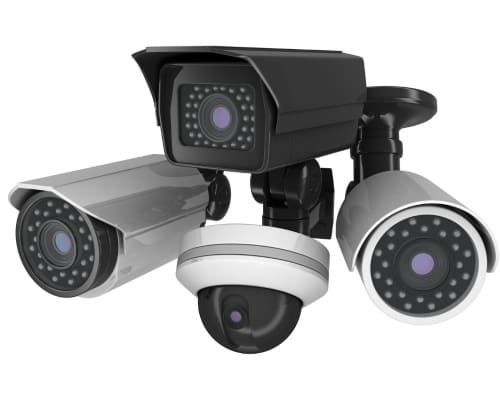
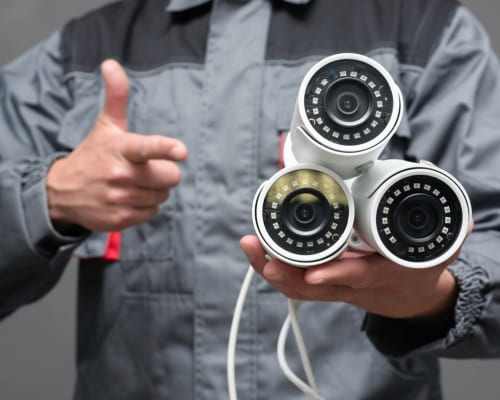
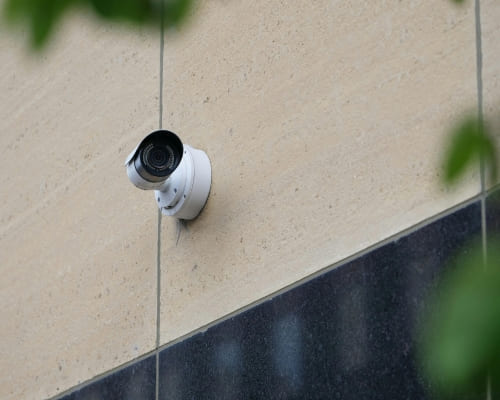
People generally call about cameras for one of three reasons: something has already happened on their street, they are about to leave the property empty for a stretch, or a delivery or a car has gone missing and they realised they have no record of it. All three point at the same first question, which is not which camera to buy but what you actually need to be able to see. Most homes across the Melton corridor end up with a mix of turret and bullet cameras rather than one type everywhere, because each solves a different problem. Turrets sit neatly under an eave, resist the glare bounce that ruins dome images at night, and are the workhorse of a typical four to six camera house. Bullets project further out from the wall and suit long driveway or side-boundary runs where you need reach instead of a wide field. Domes still make sense inside a shop or a warehouse where a discreet, vandal-resistant profile matters more than distance, and we specify IK10-rated bodies wherever the camera is within arm's reach of the public. PTZ cameras earn their place on larger commercial yards where one operator-controlled camera can cover ground that would otherwise take four fixed units. On resolution, 4 MP at 2688 by 1520 pixels is the sensible default for residential work and gives you a readable face at a front door, while 8 MP at 3840 by 2160 is worth the extra where you need a number plate off a driveway or a face across a car park. Colour-at-night cameras with a warm spotlight are genuinely useful on a dark western-suburbs street with no overhead lighting, because an infrared image tells you a person was there and a colour image tells you what they were wearing. We will also tell you where a camera is pointless, which is usually the fifth one somebody wanted aimed at a blank side fence.
Visionova Security
How We Cable And Configure A System That Still Works In Five Years

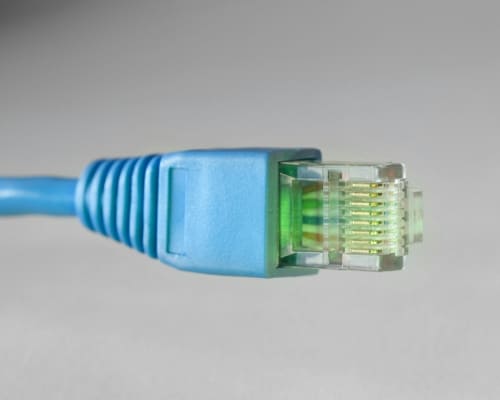
The difference between a CCTV system that lasts and one that fails in the third summer is almost entirely in the cabling and the power. We run Cat6 back to a single recorder position and stay inside the 90 metre permanent link limit that structured cabling allows, because a camera at 110 metres will work on the bench and drop out on a hot afternoon. Power over Ethernet does the rest: 802.3af delivers 15.4 watts, 802.3at delivers 30 watts, and we budget the switch so that every camera with an infrared array or a heater still has headroom when they all switch to night mode at once. Cable is routed through the roof cavity and out under the eave rather than stapled down a wall, which is straightforward in the slab-on-ground brick veneer houses that dominate the newer estates and considerably harder in the older Melton stock, with a minimum bend radius of about 25 mm respected at every turn and a 20 mm conduit fixed with galvanised saddles used on any exposed external section so ultraviolet light never reaches the jacket. That matters here more than people expect. The Bureau of Meteorology records an annual average of just 513.5 mm at its Rockbank station, so water ingress is rarely what kills gear in this corridor; heat and ultraviolet exposure are, and a roof cavity on a dark-roofed estate house runs far hotter than the 26.7 degrees mean January maximum recorded at Melbourne Airport. For that reason we put the recorder, the switch and the power supply in a garage or a cupboard, never in the roof. Recording goes to a surveillance-rated drive built for continuous writing rather than a desktop drive that was never designed to be written to every second of every day, and H.265 compression roughly halves the bitrate against H.264 so you keep far more days of footage on the same disk. The same Cat6 runs that feed the cameras are the ones we use for data points installation, so if you want a hardwired point in the study it costs very little extra while we are already in the roof.
Visionova Security
Why Homes And Businesses In Melbourne's West Call Visionova Security
The security camera market in Melbourne's western suburbs is genuinely crowded, and a good part of it is not made up of security people at all. Antenna installers, general handypeople and computer shops all list CCTV on their service pages, which is why so many systems in this corridor were fitted competently as a cabling job and never designed as a security job. Visionova Security is licensed for both halves of that: Private Security Individual Licence Z70-718-31S is endorsed as a Security Adviser, which is the licence to assess a property and recommend what it needs, and as a Security Equipment Installer, which is the licence to fit it. You can check that number on the Victoria Police licensing register, and we would rather you did. Being based in Rockbank also changes the practical experience: we know which estates have a usable truss roof space and which two-storey builds will need a cavity slide or an external conduit run, so the quote you get reflects the house in front of us instead of a generic figure. A shopfront on Station Road in Melton South, a warehouse off Ferris Road in Cobblebank and a new four-bedroom house on a Woodlea lot are three genuinely different jobs, and pricing them the same is how customers end up overpaying for one and under-covered on another. We do not sell monitoring contracts you cannot leave, we do not lock footage behind a subscription, and we tell you when a camera you have asked for will not help. Where a job crosses into fixed 240 volt wiring, that is an electrician's work under AS/NZS 3000 and we say so upfront rather than quietly doing it ourselves. We also handle security camera repairs on systems we did not install, so if part of an existing setup is still usable we will tell you rather than replace it.
Visionova Security
What CCTV Installation Actually Costs In Melbourne's Western Suburbs
Nobody in this trade publishes prices, which is exactly why we will. Based on published 2026 Australian installer pricing, a professionally supplied and installed four-camera system for a typical home sits between $1,400 and $2,500, and independent survey data puts the Melbourne residential average for a four-camera 4 MP system at around $2,093. Each additional camera beyond the base system generally adds $250 to $450 depending on the model and how far the cable has to travel. Commercial work runs higher, with the Melbourne commercial average closer to $3,423, because business sites usually need more coverage, higher resolution for identification, and cabling through a ceiling space that is not a domestic truss roof. If you have already bought hardware, labour-only installation is the cheaper path and the market rate sits near $150 per camera. Three things move your number more than anything else: whether the house is single or double storey, since a second-storey run needs a cavity slide or external conduit and typically adds a few hundred dollars; how far the furthest camera is from the recorder; and whether there is roof access above the run or whether we are working under a raked ceiling or a concrete slab. Those are market ranges rather than a Visionova Security price list. The only honest number is the one that comes after somebody has stood in your driveway and looked at it, which is why the quote is free and fixed in writing before any work starts. Call 0485 702 206.
Visionova Security
Wired, Wireless Or Battery Cameras: An Honest Comparison
Wired Power over Ethernet is what we recommend for almost every permanent installation, and it is worth understanding why rather than taking it on faith. One Cat6 cable carries both power and video, so there is nothing to recharge, nothing competing for Wi-Fi airtime, and no camera quietly dropping off the network the week you need it. The trade-off is labour: somebody has to get that cable from the recorder to the eave, and in a house with no roof access over part of the run that is genuinely harder. Wireless cameras that still need a power point are the middle option and make sense for a specific gap, such as a garage or a granny flat where running cable would mean lifting pavers, but every one of them adds load to a home network that is often already struggling. Battery and solar cameras are the most flexible and the least reliable: they record on motion rather than continuously, so the footage you want is frequently the two seconds before the camera woke up, and on the exposed western plain a solar panel that faces the wrong way will not keep up through July. Our usual recommendation is a wired core covering the front door, driveway and main approach, with a battery unit only where cable genuinely cannot go. If someone quotes you an all-wireless system for a whole house because it is quicker to install, that is a decision about their day, not your security. Cameras are also worth pairing with alarm systems, because a camera tells you what happened while an alarm interrupts it while it is happening. The site visit is free and the quote is written and fixed before any work starts, so ring 0485 702 206 and we will come and look at the property.
Related Concreting Services
Intruder alarm systems designed to AS/NZS 2201.1 and zoned around how your household actually lives, so the alarm gets armed instead of ignored. Monitored or self-monitored, with no lock-in contracts and a fixed price up front.
Televisions mounted into real structure on timber, brick or concrete, at the right height, with cables concealed rather than dangling. Usually done on the same visit as your data point or camera work.
TESTIMONIALS
What Our CCTV Installation Customers Say About Us
The Process
3 Step Process For Your CCTV Installation Needs

On-Site Security Assessment
We walk the property with you, check entry points, sight lines and cable routes, then recommend only the equipment your home or business actually needs.

Fixed-Price CCTV and Alarm Quote
You get a written price before anything starts, itemised by camera, sensor or point, with no hourly rate creeping up and no surprises on the invoice.

Licensed Installation and Handover
We install, test every device, set the app up on your phone and show you how it works before we leave your property.
CCTV Installation In Melbourne
FREQUENTLY ASKED QUESTIONS
Everything you need to know about our CCTV Installation In Melbourne
How much does it cost to get CCTV installed?
Published 2026 Australian installer pricing puts a professionally supplied and installed four-camera home system between $1,400 and $2,500, with each extra camera adding roughly $250 to $450. Commercial sites typically run higher because they need more coverage and higher resolution for identification. If you supply your own hardware, labour-only installation is cheaper again. Your actual figure depends on camera count, cable distance, and whether the house is single or double storey, so we quote in writing after looking at the property. Call 0485 702 206.
Do you need an electrician to install security cameras?
Not for the camera work itself. Power over Ethernet cameras run on extra-low voltage delivered down the data cable, which is security and cabling work rather than electrical work, and cabling that connects to the telecommunications network must be carried out by an ACMA-registered cabler under the AS/CA S009 wiring rules. Where a job does involve fixed 240 volt wiring, such as adding a new power circuit for a recorder cabinet, that is a licensed electrician's work under AS/NZS 3000 and we will tell you rather than do it ourselves. Installing security equipment in Victoria also requires a private security licence, which many people quoting this work do not hold.
Which is better, wireless or wired security cameras?
For a permanent system, wired wins on every measure that matters after installation day. A single Cat6 cable carries both power and video, so there is no battery to recharge, no Wi-Fi congestion, and no camera dropping off the network unnoticed. Wireless cameras suit specific gaps where cable genuinely cannot go, such as a detached shed or a rented property. Battery and solar units only record on motion, so they routinely miss the moment before they wake up. Our standard recommendation is a wired core with wireless only where it is unavoidable.
Can my neighbour have a camera pointed at my backyard in Australia?
In Victoria, optical surveillance is governed by the Surveillance Devices Act 1999, and the practical position is that incidental capture of a neighbouring property from a camera covering your own is generally acceptable, while deliberately aiming a camera to observe activity inside someone else's private space is not. On the small lots common across the new estates it is almost impossible to cover your own side boundary without some overlap, which is why we set the angle and use privacy masking during setup rather than leaving it to chance. Businesses recording customers or staff have further obligations, including under the Privacy Act 1988 once turnover passes three million dollars. We design placement with this in mind on every job.
How long does a CCTV installation take?
A standard four to six camera installation on a single-storey home is usually a one-day job, including cabling, mounting, recorder setup, app configuration and the handover walk-through. Double-storey homes and properties with limited roof access take longer because each cable drop has to be fed down a wall cavity or run in external conduit. Commercial sites are quoted individually and are often staged so the business keeps trading. We give you a realistic time frame with the quote rather than discovering it on the day.
How many cameras do I actually need?
Fewer than most people are sold. The rule we work to is that every camera must answer a specific question, and the first four usually answer the important ones: who came to the front door, what happened in the driveway, who came through the side gate, and what happened at the rear entry. On a standard estate block that is a complete system. Larger blocks in Taylors Hill or acreage-style holdings around Deanside need more because the distances are greater, and businesses need enough overlap that a person can be tracked between fields rather than appearing and vanishing. We will tell you where the point of diminishing returns is.
Request A Free CCTV Installation Quote
GET A FREE QUOTE
BUSINESS
SERVICES
SERVICE AREAS
OPERATING HOURS
Sun: 7:00am - 9:00pm
Mon: 7:00am - 9:00pm
Tue: 7:00am - 9:00pm
Wed: 7:00am - 9:00pm
Thu: 7:00am - 9:00pm
Fri: 7:00am - 9:00pm
Sat: 7:00am - 9:00pm